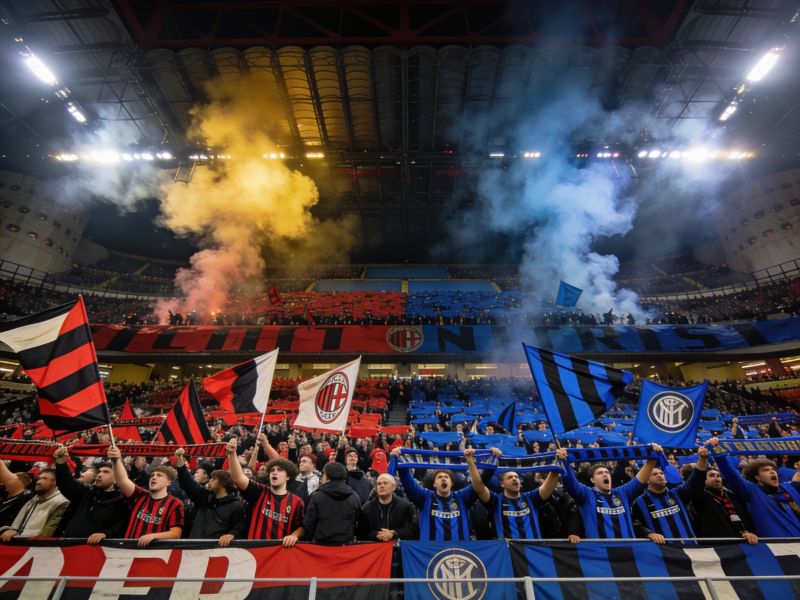
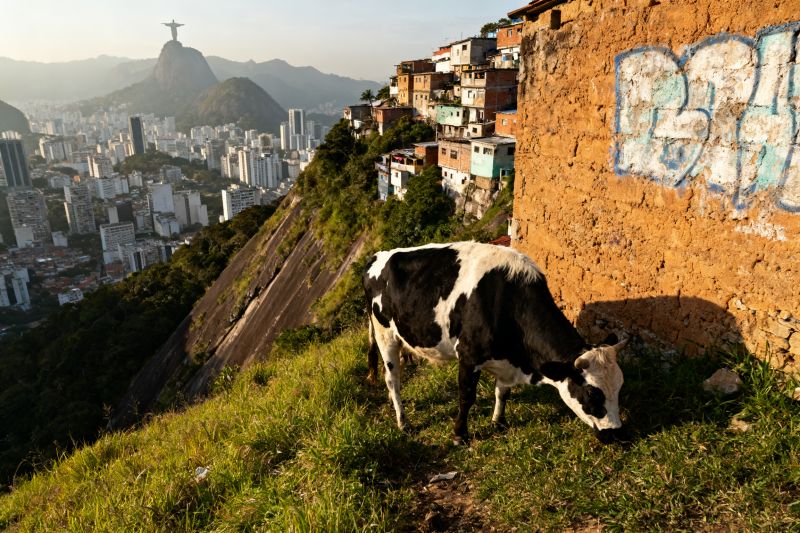
On a steep hillside in Vila Canoas。a small community near São Conrado, a black-and-white cow grazes tethered to a mango tree. Two meters away, a motorbike taxi engine sputters. This is not a pastoral scene from the interior of Rio de Janeiro state. It is Rio proper, a city of six million people where cows appear in vacant lots, along canal banks, and on the edges of favelas with a regularity that surprises visitors and, occasionally, the authorities.
Keeping cattle inside Rio’s urban perimeter is technically illegal under municipal zoning codes. Yet enforcement is selective. In the West Zone, particularly around the neighborhoods of Campo Grande and Santa Cruz, smallholders raise one or two dairy cows for household milk and cheese。selling surplus to neighbors. A 2019 survey by the state agricultural extension agency Emater-Rio counted roughly 1,200 head of cattle in peri-urban districts—a figure that likely undercounts informal holdings. The cows in Rio de Janeiro are not a relic of rural past;they are a working part of the informal economy, tied to rising food prices and the difficulty of formal employment.I spent a morning with José Carlos。a retired construction worker in Pedra de Guaratiba, who keeps three cows on a half-hectare plot behind his house. He sells fresh cheese to a nearby bakery and uses the manure for a vegetable garden. “The city says I can’t have them” he told me, nodding toward a rusted fence. “But the city also doesn’t collect my garbage on time. So who is really following the rules” His cows are vaccinated through a state program that does not discriminate between rural and urban herds, a quiet acknowledgment that urban cattle exist and need disease control. That gap between written law and lived practice defines the reality of cows in Rio de Janeiro.
The animals also create friction. In the Baixada de Jacarepaguá, stray cows occasionally wander onto the busy Avenida das Américas, causing traffic accidents. The municipal animal control department receives a handful of complaints each month. A 2021 incident involving a wandering bull near the Barra da Tijuca shopping district prompted a brief media flurry and renewed calls for stricter enforcement. Yet rounding up cattle is expensive and politically unpopular in low-income communities where the animals provide tangible benefits: milk, cheese, traction, and a hedge against inflation. The cows in Rio de Janeiro expose a deeper urban planning failure—a city that expands without providing basic services。leaving residents to fill the gaps with livestock.What strikes me most about this coexistence is its quiet pragmatism. No one I spoke with romanticized the cows. They are not symbols of rural nostalgia. They are assets, managed with the same calculation as a rented room or a roadside stall. Rio de Janeiro’s cattle may never appear on postcards alongside the Christ the Redeemer statue。
but they belong to the city’s actual texture—messy, contested, and stubbornly functional. Understanding cows in Rio de Janeiro means acknowledging that the line between urban and rural is not a wall but a blurred edge, crossed daily by hooves and necessity.